Contents
Scroll to:
https://doi.org/10.47093/3034-4700.2025.2.4.3-16
Scroll to:
Modern healthcare in the Russian Federation is built on the principles of the Semashko healthcare system while integrating contemporary organizational and digital solutions. The article analyzes the current healthcare model as a key instrument for achieving the National Development Goal “Preservation of population, health promotion and improvement of people’s well-being.” The governance structure is described at federal and regional levels, including the roles of the Ministry of Health, federal regulatory and insurance institutions, national medical research centers, and regional health authorities. Particular attention is paid to the vertically integrated network of public healthcare providers and the three‑tier system of medical care organization, ensuring stepwise accessibility of primary, specialized, and high‑tech care across 89 regions of the country. The mixed budget‑insurance financing model, with compulsory health insurance as a core mechanism, and the State Guarantees Program are presented as key tools for securing free medical care and program‑target management of resources. The preventive orientation of the system, including measures for the working population, and the rapid development of digital health technologies are highlighted as essential drivers of efficiency and quality. The article concludes that the modern Russian healthcare model combines continuity with historic principles and innovative approaches to meet current demographic and epidemiological challenges.
Murashko M.A. Modern healthcare model in the Russian Federation. The BRICS Health Journal. 2025;2(4):3-16. https://doi.org/10.47093/3034-4700.2025.2.4.3-16
“There is no task or problem that domestic medicine cannot solve.”
N.A. Semashko, the first People’s Commissar of Health of the RSFSR
The modern healthcare system of the Russian Federation is based on principles established more than a century ago during the formation of the world’s first national healthcare system, which was later named after its founder, the first People’s Commissar of Health, Nikolai Alexandrovich Semashko [1]. These principles include universal coverage of the population with medical care, a preventive focus on care (dispensary observation, early detection of diseases), priority in providing care to socially vulnerable groups, and alignment between medical science and practice. The consolidation of disparate medical institutions into a single network, the introduction of the principle of district-based territorial service, and the provision of free medical care for all social groups have made it possible to optimize the use of resources and improve access to care at all stages.
Thus, the Semashko model of healthcare system became the basis for the current model of Russian healthcare.
The strategic objectives facing the healthcare system at the present stage are defined by the National Development Goals set out in Decree No. 309 of the President of the Russian Federation dated May 7, 2024, “On National Development Goals of the Russian Federation for the Period Until 2030 and for the Future Until 2036.” The objective of “preservation the population, strengthening health and improving the wellbeing of people, supporting families” has the greatest impact on the development of medical care. The achievement of this objective is determined by a number of target indicators and depends on the coordinated work of all components of the healthcare system, the rational use of human, material, technical, and information resources, and the advanced development and application of health-saving technologies, preventive medicine, and personalized medicine.
As discussed subsequently in the article, the modern healthcare model of the Russian Federation is considered as the successor to the principles of the Semashko healthcare system and, at the same time, as one of the key instruments for achieving the specified National Development Goal.
In accordance with Russian Federation legislation1, the healthcare model includes state, municipal, and private healthcare systems.
State regulation in the healthcare sector is a key element in ensuring the sustainable functioning of the healthcare system, based on the principle of separation of powers between federal, regional, and municipal levels of government to achieve effective management and optimal use of healthcare system resources.
The Russian Federation’s public healthcare system meets the basic needs of the population providing affordable, high-quality medical care, which is organized and provided in accordance with medical care procedures, taking into account medical care standards and based on clinical guidelines.
The current model of the Russian Federation’s public health care system is represented at the federal and regional levels, each of which has its own structure (Figure 1).
FIG. 1. Organizational and functional model of healthcare in the Russian Federation

Note: MoH of Russia – Ministry of Health of the Russian Federation; FCMIF – Federal Compulsory Medical Insurance Fund; TFCMI – Territorial Fund for Compulsory Medical Insurance; Roszdravnadzor – Federal Service for Supervision of Public Health and Social Development; TB of Roszdravnadzor – Territorial body of Roszdravnadzor; HE – higher education; HEIs – higher education institutions subordinate to the MoH of Russia; NMRCs – national medical research centers; Federal medical organizations – medical organizations subordinate to the MoH of Russia; REA – regional executive authority in the field of health care; SSEIs – secondary specialized education institutions; SSE – secondary specialized education; CMI – compulsory medical insurance; VMI – voluntary medical insurance; * state-owned and non-state-owned organizations.
The federal level of the model is represented by federal executive bodies in the field of health care:
The Federal Compulsory Medical Insurance Fund, being a state extrabudgetary fund and performing the function of an insurer in the compulsory medical insurance system in the Russian Federation, also belongs to the federal level of the model and ensures the implementation of a unified state policy in the field of social protection of citizens. It is also responsible for coordinating the activities of entities and participants in the compulsory medical insurance system in the Russian Federation as well as ensuring the possibility of receiving medical care under a compulsory health insurance policy within the framework of the basic compulsory health insurance program in all the constituent entities of the Russian Federation.
Since 2018, as part of the implementation of the National Project “Healthcare,” national medical research centers have become an important component of the federal model. Their organization and development became possible thanks to the federal project “Development of a network of national medical research centers and introduction of innovative medical technologies.”
National Medical Research Centers are unique medical organizations under the jurisdiction of the Ministry of Health of the Russian Federation that integrate scientific, organizational, methodological, educational, and professional capabilities to improve the quality of medical care by developing innovations in healthcare and implementing them in practical healthcare. Between 2018 and 2024, 38 national medical research centers were established within the Russian Federation’s healthcare system, covering various clinical profiles and areas of healthcare organization. Starting in 2025, in accordance with the instructions of the President of the Russian Federation, the network of national medical research centers is set to be expanded. As a result of the implementation of the project “Development of Federal Medical, Scientific, and Educational Organizations” during 2025–2030, continuity in the provision of specialized and high-tech medical care will be maintained by ensuring continuity of patient care, and the availability of remote, online consultations will increase. For doctors working in medical organizations in the constituent entities of the Russian Federation, it will become easier to discuss the treatment of specific patients with specialists from leading federal centers anywhere in the country, as well as to make quick decisions on hospitalizing patients, if necessary, in federal clinics. A socially significant result of the project will be the provision of medical care to 1.5 million citizens using advanced and unique medical technologies for diagnosis and treatment, regardless of their place of residence.
An important component of the federal level of the modern healthcare model of the Russian Federation is higher education institutions that provide training for highly qualified medical personnel. Currently, 48 higher education institutions under the jurisdiction of the Ministry of Health of the Russian Federation offer basic and additional education programs at the specialist, residency, postgraduate, professional retraining, and advanced training levels, forming and developing the healthcare system’s main and most long-term resource: medical personnel.
Like most national healthcare systems, the Russian healthcare system faces serious challenges related to staffing issues in healthcare [2]. The medical training system in the Russian Federation is currently being successfully adapted to the real needs of the healthcare labor market, ensuring the integrative unity of educational policy and personnel policy in the healthcare system. Targeted measures are being developed and implemented to attract and retain medical personnel, including in the primary health care system.
Another completely unique component of the modern healthcare model of the Russian Federation at the federal level is the institution of chief external specialists of the Ministry of Health of the Russian Federation. This cohort of specialists comprise leaders in the relevant field of medical activity and represent the expert potential of the healthcare system of the Russian Federation. They determine the development strategy for the relevant field and tactical decisions for its implementation, aimed at improving medical care, studying and replicating new medical technologies. In addition, they participate in the development and implementation of personnel policy in the Russian Federation with regard to medical workers providing medical care in the relevant specialty (field, profile of activity).
The regional level of the model is a collection of regional healthcare systems that provide medical care in 89 constituent entities of the Russian Federation. The coordinating structure in each constituent entity is the regional executive authority in the field of health care, which is empowered to implement state social policy and ensure state guarantees of free medical care for the population of a particular region.
Despite the existence of uniform principles for the organization of medical care, it should be noted that there are specific features in the activities of regional health care systems, determined by the medical, demographic, climatic, geographical, and socio-economic characteristics of each specific constituent entity of the Russian Federation. The ratio of urban to rural populations, gender and age demographics, population density, transportation accessibility, and the geographical dispersion of settlements are factors that must be considered when planning a network of medical organizations. In addition, one needs to consider routing patients according to specific clinical profiles (e.g., routing patients with cardiovascular diseases, malignant neoplasms, injuries, etc.), planning the location of emergency medical stations and subunits to enable the provision of emergency medical care.
The key components of the state healthcare system are medical and pharmaceutical organizations subordinate to federal and regional executive authorities, as well as healthcare organizations responsible for supervising consumer rights and human welfare, forensic institutions, other organizations and their separate divisions operating in the field of healthcare.
Educational institutions offering secondary vocational education programs in the medical field also play an important role in the Russian Federation’s public health care system, meeting the practical health care needs for specialists with secondary medical education. Most organizations of this type are regionally subordinate, which allows educational organizations to respond quickly to the changing needs of the labor market in the relevant constituent entity of the Russian Federation, and to focus on the practical training of students in regional medical organizations. This is particularly relevant in the context of the growing role of personnel with secondary medical education in the direct provision of medical care to the population, especially with regard to preventive measures.
In accordance with legislation of the Russian Federation2, there are four types of medical care:
To ensure that the population has access to affordable, high-quality medical care, a hierarchical system for the provision of medical care based on a three-tier model has been introduced nationwide (Figure 2). This system has been successfully adapted to the needs of each of the 89 constituent entities of the Russian Federation, ensuring the effective functioning and interaction of medical organizations at all levels.
FIG. 2. Three-tier healthcare system

Medical organizations of the first tier provide medical care to the population of the municipal formation in which they are located. The list of these organizations and their structural units include paramedic (feldsher) and paramedic-midwife (feldsher-midwife) stations, where medical care is provided by mid-level medical personnel (paramedics and midwives), medical clinics, district hospitals, polyclinics, district hospitals, and central district hospitals. The list of types of medical care provided in medical organizations of the first tier is determined by the type of medical organization and the size of the population served. Medical organizations of the first tier form the foundation of the healthcare system, as it is primarily these medical organizations that provide primary healthcare, including the organization and implementation of preventive measures and efforts to promote healthy lifestyles among the population. The legislation provides for standards that determine the territorial accessibility of medical organizations, the principles of district service and universal coverage of the population, which are not simply preserved historically, but expanded in the modern model. This takes into account the possibility of assigning citizens to a medical organization not only at their place of residence, but also at their place of study or work, which significantly increases the accessibility of this type of medical care, bringing the possibility of receiving it as close as possible to the place of actual residence, work, or study of the citizen.
Medical organizations of the second tier provide mainly specialized (except for high-tech) medical care to the population of several municipalities for a broader or specialized clinical profile (e.g., interregional hospitals, dispensaries).
Medical organizations of the third tier are represented by organizations that have structural divisions providing high-tech medical care, which is their distinguishing feature.
Currently, the state healthcare system meets all the basic healthcare needs of the population, including in rural areas and remote and hard-to-reach settlements across the country. This has been made possible primarily through the targeted development and strengthening of primary healthcare, which is the foundation of the entire healthcare system in the Russian Federation. To bring primary healthcare as close as possible to where people live, study, and work, the network of paramedic-midwifery stations and medical clinics has been expanded, mobile healthcare services and telemedicine technologies have been introduced. A targeted training of medical personnel who are able to work in rural areas is being carried out. Thus, the Russian state healthcare system is built on the principle of proximity-based accessibility of medical care, within which the patient’s initial contact with the healthcare system takes place when primary healthcare is provided closest to their actual location. This allows most of the population’s health-related problems to be solved at this level, relieving the resource-intensive inpatient sector and ensuring the implementation of the principle of preventive medical care.
As of December 31, 2024, the network of state medical organizations in the Russian Federation consists of:
The municipal healthcare system is represented by local government bodies exercising powers in the field of healthcare, as well as by separate municipal medical and pharmaceutical organizations in a number of constituent entities of the Russian Federation.
The private healthcare system consists of privately owned medical and pharmaceutical organizations established by legal entities or individuals, as well as other organizations operating in the field of healthcare.
In summary, the organizational and functional model of the Russian healthcare system is characterized by a vertically integrated hierarchical structure with two types of relationships between the components of the system: direct (linear) and functional subordination. Despite the existence of organizations with different forms of ownership, the system has functional unity – all elements, including private medical and pharmaceutical organizations, operate within a single regulatory framework. State medical organizations have dual subordination at the regional level: on the one hand, they are subordinate to their direct founder, but at the same time they are required to comply with health protection legislation and interact with control and supervisory bodies. The modern healthcare system model is characterized by a clear division of functions among all components of the system, ensuring optimal efficiency. Strategic development management and control are concentrated at the federal level, while operational management is concentrated at the regional level.
The organizational model of the healthcare system is based on the principle of standardization from the perspective of regulatory control – the introduction of requirements for the organization of medical activities in accordance with the provisions on the organization of medical care of a particular type, procedures for the provision of medical care, based on clinical guidelines and taking into account medical care standards. This makes it possible to ensure an optimal degree of regulation by developing and establishing requirements for work, services, and technologies used in healthcare, as well as for the conditions for their provision [3][4]. Regulations on the organization of medical care have been developed for each type of care and are enshrined in orders issued by the Ministry of Health of the Russian Federation. On September 1, 2025, updated regulations on the organization of primary health care, specialized medical care, and palliative care came into force, reflecting current trends and including innovative organizational technologies aimed at improving and increasing the availability of the relevant type of medical care.
Medical care procedures are structural and organizational standards that contain requirements for the stages of medical care provision for a specific clinical profile, rules for organizing work at each stage, a list of equipment, and recommended staffing standards. The introduction of medical care procedures has ensured compliance with uniform requirements for the organization of medical care, which in turn has led to a systematic approach to the quality and safety of medical activities and the observance of the rights of Russian citizens in the field of healthcare [4].
Clinical guidelines contain evidence-based structured information on prevention, diagnosis, treatment, and rehabilitation, including patient management protocols (treatment protocols), medical intervention options, and a description of the sequence of actions to be taken by medical professionals, taking into account the course of the disease, the presence of complications and comorbidities, and other factors affecting the outcomes of medical care. The main purpose of creating clinical guidelines is to provide information support for doctors’ decisions that contribute to improving the quality of medical care for patients with a particular disease, condition (group of diseases, conditions), taking into account the latest clinical data and principles of evidence-based medicine.
Medical care standards are medical and economic documents that define a set of average indicators for the frequency of use of specific medical services, drugs, medical devices, blood components, and therapeutic diet for certain diseases. Medical care standards are based on current clinical guidelines.
Based on the principle of the source of financial support for healthcare activities, it is traditional to distinguish between three types (models) of healthcare systems: predominantly state-run, predominantly market-based (private), and predominantly insurance-based. However, in practice, many countries, including the Russian Federation, operate mixed models.
The Russian model of healthcare financing is defined as a mixed, budget-insurance system characterized by a combination of state financing of healthcare, medical insurance, and private healthcare.
The key source of funding for the healthcare system is compulsory health insurance, which covers the majority of medical care, including inpatient care. Since 2014, high-tech medical care has been included in the compulsory health insurance program. Currently, the list of types of high-tech medical care guaranteed to the population free of charge through compulsory health insurance has been significantly expanded, which has increased the availability of medical care provided using complex, unique, and resource-intensive technologies.
A distinctive feature of the compulsory health insurance system in the Russian Federation is its non-commercial nature. Medical organizations participating in the compulsory health insurance program receive payment for medical care provided at an approved rate, which provides only for compensation of the costs incurred by medical organizations for providing medical care at cost, without setting a profit margin.
The financial stability of the compulsory health insurance system, as the main form of social protection of the population’s interests in the field of health care, is guaranteed by the state. Federal legislation enshrines the principle that the state guarantees the rights of insured persons to the fulfillment of compulsory health insurance obligations under the basic program, regardless of the financial situation of the insurer.
Thus, the healthcare system of the Russian Federation is financed primarily through compulsory health insurance funds. Funds from the federal budget and the budgets of the constituent entities of the Russian Federation supplement the financial support for the state healthcare system by paying for certain types of medical care (specialized emergency care; high-tech care, except for the types included in the compulsory health insurance program; palliative care), medical care for certain socially significant diseases (sexually transmitted diseases caused by the human immunodeficiency virus, acquired immunodeficiency syndrome, tuberculosis, mental disorders, and behavioral disorders), subsidized medication, and a number of other medical measures.
The private healthcare system, in turn, provides citizens with the opportunity to choose non-state medical organizations, including for medical care that is not guaranteed under the state guarantee program (for example, in the field of cosmetology), or provided under different conditions (more convenient hours, priority appointments, etc.), with the provision of additional non-medical services (household, transportation, etc.).
The existence of various sources of funding for the healthcare system of the Russian Federation and medical organizations of all forms of ownership makes it possible to meet all of the population’s healthcare needs, including citizens’ constitutional right to free medical care, while the synergy of these components within a single legal and organizational structure ensures the functional unity of all elements of the healthcare system.
The financing of the Russian Federation’s public healthcare system is carried out in accordance with the following principles:
The main instrument for implementing the constitutionally guaranteed right to free medical care in the Russian Federation is the program of state guarantees of free medical care to citizens4. This document is developed and approved annually at the federal level by the Government of the Russian Federation. At the level of each constituent entity of the Russian Federation, territorial programs of state guarantees for the provision of free medical care to citizens are developed, adapting the conditions for the implementation of the program and the scope of medical care, taking into account the needs of the population of a particular region. Territorial programs are approved by the executive authority of the constituent entity of the Russian Federation and are valid in the territory of a specific region (Figure 3).
FIG. 3. Principle of forming the program of state guarantees for the provision of free medical care to citizens

The main principles for developing the state guarantee program include:
The program of state guarantees of free medical care to citizens allows for program-targeted management of medical care provision to the population at the regional level5, namely, to assess the accessibility and quality of medical care and the effective use of healthcare resources (Figure 4).
FIG. 4. Program-targeted management of medical care provision to the population at the regional level

Note: MC – Medical Care; MS – Medical Service; MO – Medical Organization; PSG – The program of state guarantees of free medical care to citizens; TPSG – Territorial program of state guarantees of free medical care to citizens; SA – State Assignment.
A key feature of the Russian healthcare system is the preventive focus, which aims to actively identify diseases at an early stage, prevent the development of diseases and pre-morbid conditions, promote healthy lifestyles among the population, and educate people about hygiene [1]. The program of state guarantees of free medical care to citizens establishes6 separate differentiated standards for the volume and financial support of medical care units for various types of preventive measures – comprehensive visits as part of preventive medical examinations, medical check-ups (including in-depth ones), dispensary observation to assess the reproductive health of women and men, visits to health centers for preventive purposes, and comprehensive visits to schools for patients with chronic diseases.
Special attention is paid to issues related to protecting the health of the working population. Measures are being developed and implemented to improve access to medical care for working citizens, including through interagency cooperation. Thus, from January 1, 2019, based on amendments to labor legislation7, employees have been granted the right to take one working day off with full pay once every three years for the purpose of undergoing a medical examination. Medical organizations, in turn, strive to optimize the process of preventive medical examinations and medical check-ups for certain groups of the adult population as much as possible, actively introducing and using lean technologies in practical healthcare, organizing patient routing to allow preventive measures to be carried out in the shortest possible time, and providing the opportunity to undergo medical examinations and check-ups in the evenings and on weekends.
Digitalization is one of the priority areas for the development of the healthcare system [5][6]. Over the past few years, the domestic healthcare system has come a long way from disparate medical information systems in individual medical organizations to the creation of a Unified State Information System in the healthcare sector, which provides information for the methodological and organizational support of healthcare system participants. Currently, medical organizations maintain medical records in the form of electronic documents, online appointments scheduling, and issue electronic sick leave certificates and prescriptions for medications. Some of the main strategic trends in the technological development of the healthcare system in the near future are the use of medical decision support systems and artificial intelligence in healthcare, remote patient monitoring, digital twins in healthcare, robotics and automation, and cybersecurity in healthcare [6–8].
Thus, the current healthcare model of the Russian Federation system is based on the principles of the Semashko healthcare system. This is supplemented by innovative digital and organizational technologies that ensure an optimal level of accessibility and quality of medical care for the population of the Russian Federation, taking into account the needs and state social guarantees, as well as ensuring the achievement of the National Development Goal of preserving the population, strengthening health, and improving the well-being of people.
The federal principle of state structure and the vast territory of the country necessitate the adaptation of regional healthcare systems, taking into account the specific characteristics of each constituent entity of the Russian Federation and the actual healthcare needs of the population, which has been successfully implemented in the current model.
1. Федеральный закон от 21.11.2011 г. № 323-ФЗ. Об основах охраны здоровья граждан в Российской Федерации (с изменениями на 23 июля 2025 года) [Russian Federation. Federal Law No. 323-FZ of November 21, 2011. On the Fundamentals of Citizens’ Health Protection in the Russian Federation (as amended on July 23, 2025)] (in Russian). Accessed 24.11.2025. http://publication.pravo.gov.ru/Document/View/0001201111220007/
2. Федеральный закон от 21.11.2011 г. № 323-ФЗ. Об основах охраны здоровья граждан в Российской Федерации (с изменениями на 23 июля 2025 года) [Russian Federation. Federal Law No. 323-FZ of November 21, 2011. On the Fundamentals of Citizens’ Health Protection in the Russian Federation (as amended on July 23, 2025)] (in Russian). Accessed 24.11.2025. http://publication.pravo.gov.ru/Document/View/0001201111220007/
3. According to data from the Federal State Budgetary Institution “Central Research Institute for Health Care Organization and Informatization” of the Ministry of Health of the Russian Federation.
4. Постановленные Правительства Российской Федерации от 27 декабря 2024 г. № 1940 “О программе государственных гарантий бесплатного оказания гражданам медицинской помощи на 2025 год и на плановый период 2026 и 2027 годов” (в редакции от 04.09.2025) [Decree of the Government of the Russian Federation No. 1940 of December 27, 2024, “On the Program of State Guarantees for the Provision of Free Medical Care to Citizens for 2025 and the Planned Period of 2026 and 2027” (as amended on September 04, 2025)] (in Russian). Accessed 24.11.2025. http://pravo.gov.ru/proxy/ips/?docbody=&nd=608201774
5. Flek VO. Public Health and Health Care Management: selected lectures. Moscow; 2023. 164 p. (In Russian).
6. Постановленные Правительства Российской Федерации от 27 декабря 2024 г. № 1940 “О программе государственных гарантий бесплатного оказания гражданам медицинской помощи на 2025 год и на плановый период 2026 и 2027 годов” (в редакции от 04.09.2025) [Decree of the Government of the Russian Federation No. 1940 of December 27, 2024, “On the Program of State Guarantees for the Provision of Free Medical Care to Citizens for 2025 and the Planned Period of 2026 and 2027” (as amended on September 04, 2025)] (in Russian). Accessed 24.11.2025. http://pravo.gov.ru/proxy/ips/?docbody=&nd=608201774
7. Трудовой кодекс Российской Федерации от 30.12.2001 № 197-ФЗ (в редакции от 29 сентября 2025) [Labor Code of the Russian Federation dated December 30, 2001, No. 197-FZ (as amended on September 29, 2025)] (in Russian). Accessed 24.11.2025. http://pravo.gov.ru/proxy/ips/?docbody=&nd=102074279/
1. Yakovleva TV, Plutnitsky AN, Ogneva EYu, et al. Primary health care – history, stages, modernization. A.I. Burnasyan Federal Medical Biophysical Center Clinical Bulletin. 2022.2:10–16. (In Russian). doi:0.12737/1024-6177-2022-2-10-16
2. Timurzieva AB, Lindenbraten AL. On certain issues of modern health care system development. Problemi socialnoi gigieni, zdravookhrneniia I istorii meditsini. 2024;32(4):723–730 (In Russian). doi:10.32687/086986X-2024-32-4-723-730
3. Russkikh SV, Lindenbraten AL, Moskvicheva LI, et al. Organizational and economic aspects of standardization of processes in the healthcare system. Health Care of the Russian Federation. 2023;67(5):367–373. (In Russian). doi:10.47470/0044-197X-2023-67-5-367-373
4. Starodubov VI, Efremova TA, Korobov NV, Loshakov LA. The medical care standards in health care system of Russia: condition and perspectives. Zdravookhraneniye Rossiyskoy Federatsii. 2015;59(4):4–9. (In Russian).
5. Murashko MA, Panin AI, Chigrina VP, et al. Organizational and legal aspects of providing medical care using telemedicine technologies in Russian Federation and foreign countries. National Health Care (Russia). 2024;5(4):5–19. (In Russian). doi:10.47093/2713-069X.2024.5.4.5-19
6. Gusev A.V., Vladzimirskii A.V., Golubev N.A., Zarubina T.V. Informatization of healthcare in the Russian Federation: history and results of development. National Health Care (Russia). 2021;2(3):5–17. (In Russian). doi:10.47093/2713-069X.2021.2.3.5-17
7. Murashko MA, Vankov VV, Artemova OR, Gusev AV. Implementation of artificial intelligence technologies in Russian healthcare: results of 2018–2024. The BRICS Health Journal. 2025;2(2):3–14. doi:10.47093/3034-4700.2025.2.2.3-14
8. Kobyakova OS, Starodubov VI, Kurakova NG, Tsvetkova LA. Digital twins in healthcare: an assessment of technological and practical prospects. Annals of the Russian Academy of Medical Sciences. 2021;76(5):476–487. (In Russian). doi:10.15690/vramn1717
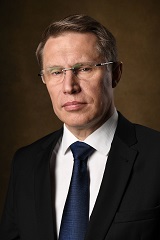
Mikhail A. Murashko, Dr of Sci. (Med.), Minister of Health of the Russian Federation
3, Rakhmanovsky per., Moscow, 127994
Murashko M.A. Modern healthcare model in the Russian Federation. The BRICS Health Journal. 2025;2(4):3-16. https://doi.org/10.47093/3034-4700.2025.2.4.3-16
 Email this article (Login required)
Email the author (Login required)
Email this article (Login required)
Email the author (Login required) 8/2 Trubetskaya st., Moscow, 119048
Federal State Autonomous Educational Institution of Нigher Education I.M.Sechenov First Moscow State Medical University of the Ministry of Health of the Russian Federation (Sechenovskiy University)
e-mail: bricshealthjournal@staff.sechenov.ru