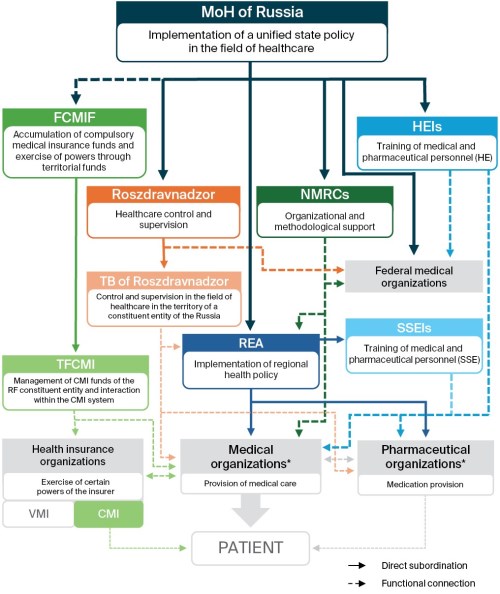
Modern healthcare in the Russian Federation is built on the principles of the Semashko healthcare system while integrating contemporary organizational and digital solutions. The article analyzes the current healthcare model as a key instrument for achieving the National Development Goal “Preservation of population, health promotion and improvement of people’s well-being.” The governance structure is described at federal and regional levels, including the roles of the Ministry of Health, federal regulatory and insurance institutions, national medical research centers, and regional health authorities. Particular attention is paid to the vertically integrated network of public healthcare providers and the three‑tier system of medical care organization, ensuring stepwise accessibility of primary, specialized, and high‑tech care across 89 regions of the country. The mixed budget‑insurance financing model, with compulsory health insurance as a core mechanism, and the State Guarantees Program are presented as key tools for securing free medical care and program‑target management of resources. The preventive orientation of the system, including measures for the working population, and the rapid development of digital health technologies are highlighted as essential drivers of efficiency and quality. The article concludes that the modern Russian healthcare model combines continuity with historic principles and innovative approaches to meet current demographic and epidemiological challenges.
Health systems in emerging economies face the dual challenge of expanding access while ensuring equity, quality, and financial sustainability amid demographic, epidemiological, and geopolitical changes. This article analyzes the health systems of Brazil, China, and Russia, three key members of the BRICS group with large populations and diverse institutional paths. Using policy documents, official statistics, and secondary literature, we examine their historical foundations, governance structures, financing mechanisms, service delivery models, and recent reforms. Despite differing political, economic, and administrative traditions, these countries share a strong state role in stewardship and a formal commitment to universal access. Brazil’s tax-funded Unified Health System is rooted in constitutional rights, decentralization, and social participation. China has achieved near-universal insurance coverage through consolidated social health insurance schemes under strengthened central regulation, alongside ongoing payment and disease-control reforms. Russia maintains universal coverage through mandatory health insurance within a territorially organized, hierarchical delivery system rooted in the Semashko model. Major challenges include regional inequalities, hospital-centered care patterns, fiscal pressures, demographic ageing, and the rising burden of chronic diseases. The comparative analysis reveals multiple institutional pathways toward universal health coverage and highlights the strategic importance of public stewardship, primary health care, and domestic production capacity. These findings contribute to debates on health system strengthening and South–South cooperation within BRICS and the broader global health agenda.
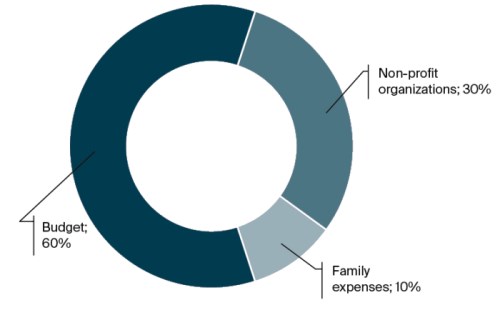
The article focuses on the analysis of current issues and challenges facing pediatric oncology and hematology. Data on cancer incidence in children at the level of economic development of the state, relative to the healthcare model are provided. The main characteristics of oncological care systems in economically developed countries and in developing countries around the world are identified, and the features of the Russian model are emphasized. Particular attention is paid to recent technologies and development vectors of molecular-targeted, cell therapy, precision surgery. The role of information technology and digital transformations in increasing the efficiency of healthcare models for providing oncological care to children in Russia is shown. National and foreign experience convincingly proves that a breakthrough in pediatric oncology is possible only with a systematic approach combining scientific innovations with access to medical care. Russia, being at a unique stage of development, demonstrates both significant successes in the field of high technologies and persistent structural problems. Thus, the key vector of development is not only the introduction of individual innovations but also solving fundamental tasks of standardization, overcoming regional inequality, and developing personnel potential, which will allow fully realizing the accumulated scientific and clinical potential.
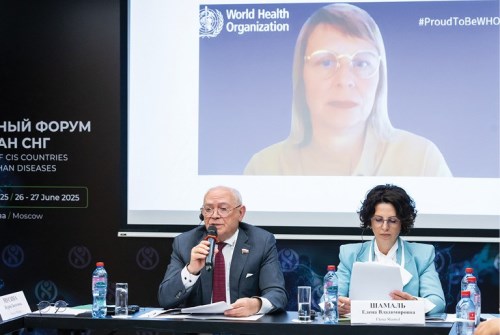
The Second Orphan Forum of the Commonwealth of Independent States, held in Moscow on June 26–27, 2025, served as a platform to translate World Health Assembly Resolution 78.11 on rare diseases into coordinated policy action. The Forum convened delegates from eight Commonwealth of Independent States members and representatives from India, the United Arab Emirates, South Africa, and Oman, advancing interregional cooperation.
Participants highlighted shared challenges: lack of national strategies and harmonized definitions of rare diseases, gaps in diagnostics and care infrastructure, limited registries, shortages of trained specialists, and unstable funding. The adopted Resolution set four priority domains for joint work: policy and regulatory development; organization of care and workforce capacity; pharmaceutical provision and health technology assessment; and international collaboration.
Country presentations showed progress alongside persistent gaps. Priorities include expanding screening, establishing centers of expertise, improving patient pathways, extending reimbursement, introducing accelerated regulatory procedures, and updating clinical guidelines. Recommendations emphasize integrated care, continuity from pediatric to adult services, stronger health technology assessment for orphan medicines, real-world data collection, and managed entry and risksharing agreements.
The Forum also concluded that closer cooperation on rare diseases is needed within BRICS, especially to improve the efficiency of orphan medicine development, manufacturing, and procurement through coordinated approaches, demand aggregation, and joint price negotiations.

ISSN 3034-4719 (Online)